As one of professional high quality Full Tubular Rivets manufacturer, you can rest assured to buy Full Tubular Rivets from Notin and we will offer you the best after-sale service and timely delivery.
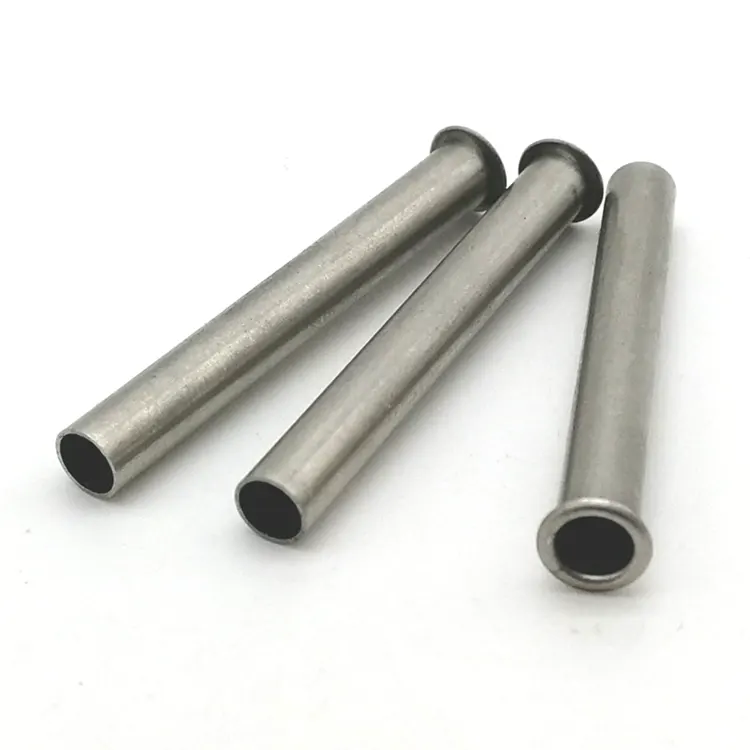
Full tubular rivets are also called as hollow rivets or tubular rivets, they are a common mechanical fastener, primarily used in applications requiring lightweighting or ventilation. Their structural characteristics are a completely hollow center with heads at each end, achieving connection through plastic deformation. Widely used in electronics, automotive manufacturing, aerospace, and other fields, they are favored for their unique structural design.
What is a hollow rivet?
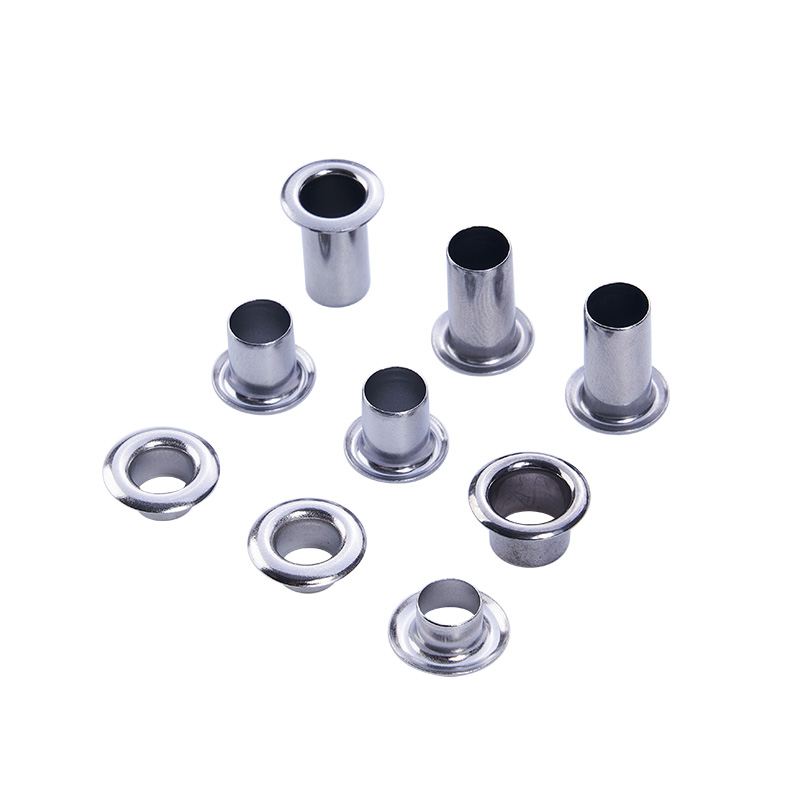
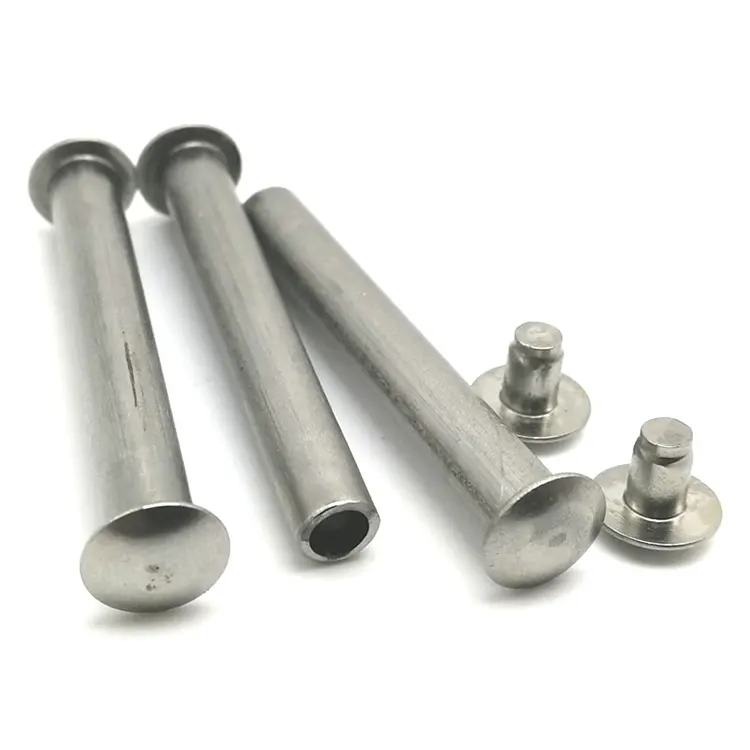
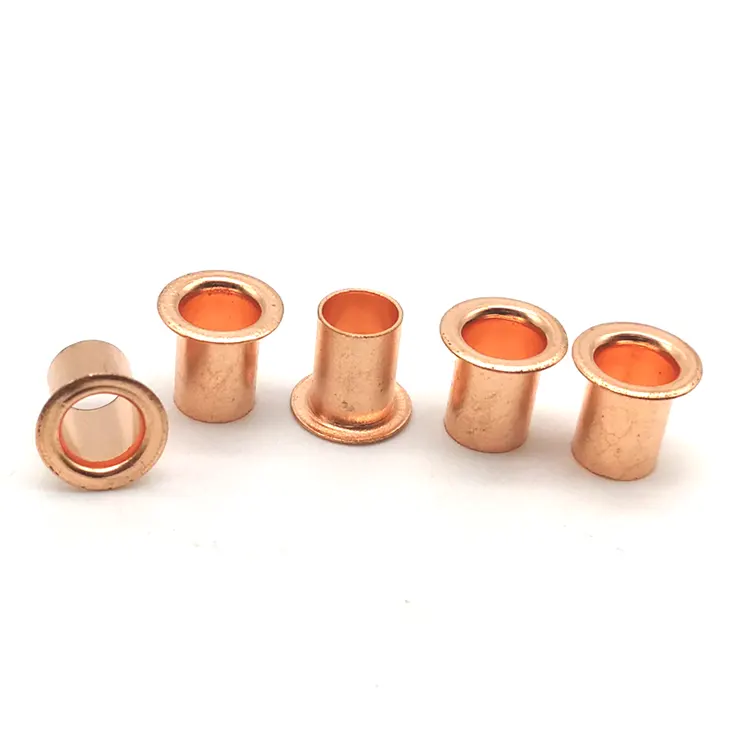
A full tubular rivet consists of a shank and a head. The shank has a through hole in the center, and the head is typically round or oval. During installation, the rivet is inserted through the materials to be joined, and the tail is expanded using a specialized tool to form another head, securing the materials together. Because of the hollow center, full tubular rivets maintain ventilation or fluid conduction after connection, which is their primary difference from solid rivets.
What materials can full tubular rivets be made of? What are the characteristics of different materials?
full tubular rivets are made from a variety of materials, with aluminum alloy, stainless steel, and copper being common.
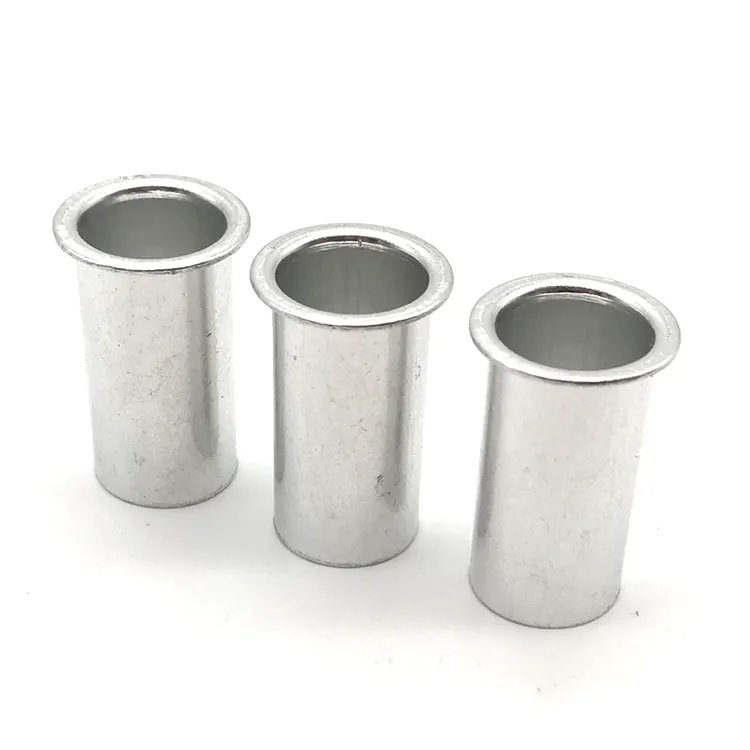
Aluminum tubular rivets are lightweight and corrosion-resistant, making them suitable for electronic products and lightweight structures. They are the most cost-effective rivets.
Stainless steel tubular rivets are strong and heat-resistant, and are often used in automobiles and industrial equipment. They are more expensive than aluminum hollow rivets.
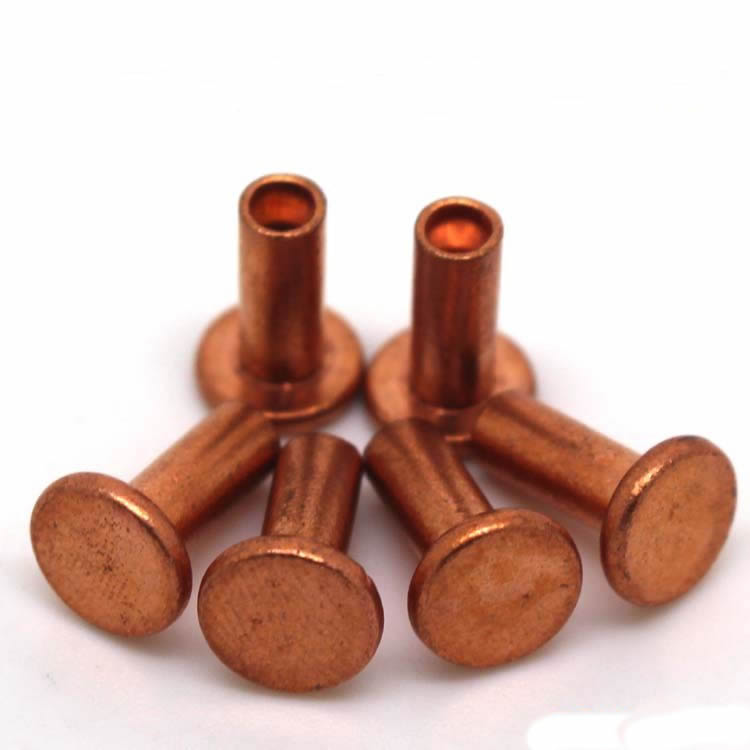
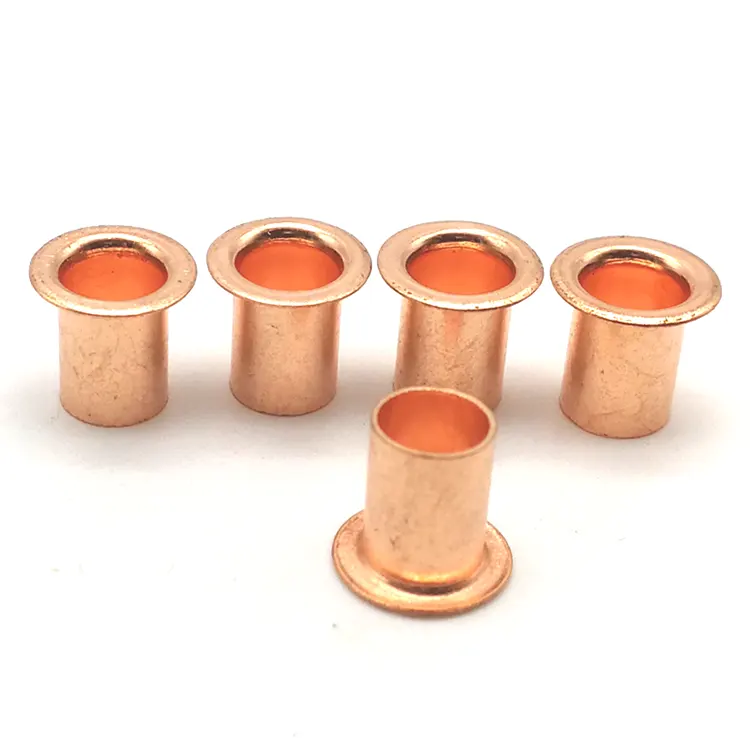
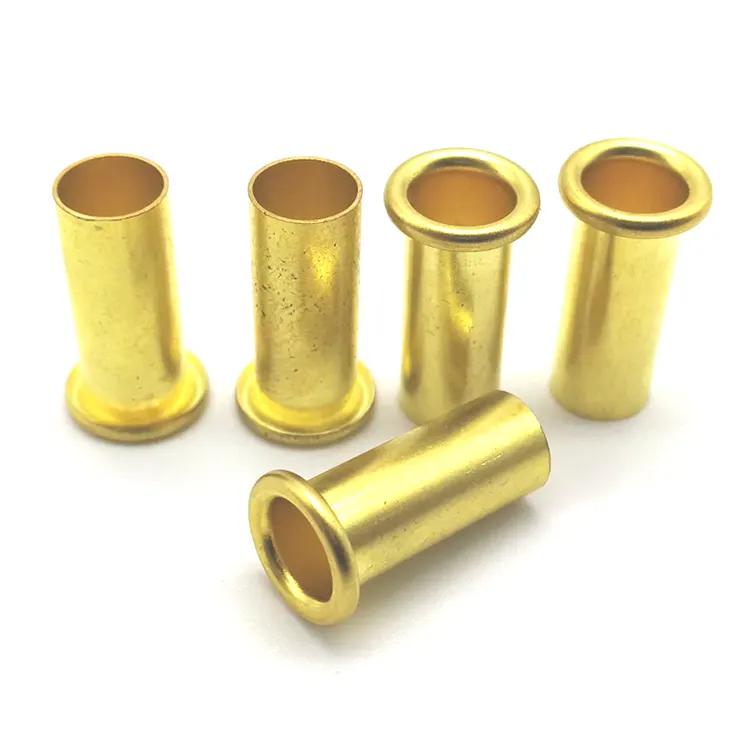
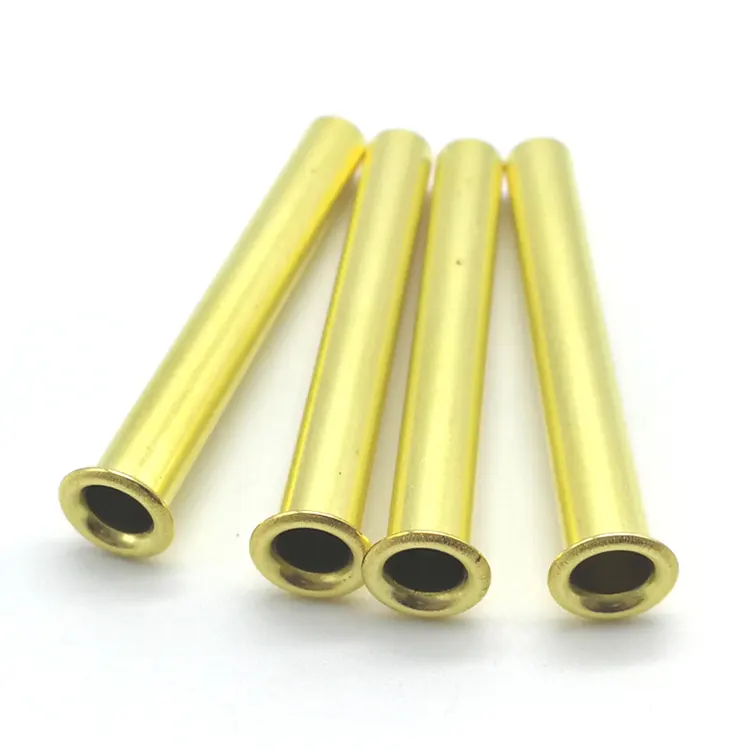
Brass tubular rivets or copper tubular rivets have good conductivity and are mostly used for electrical connections. Their disadvantage is that they are relatively expensive.
When selecting materials, factors such as the use environment, stress conditions, and cost should be considered.
Installation method of full tubular rivets
Special tools are required to install hollow rivets, such as manual riveting machines or fully automatic assembly machines.
The operation steps are as follows:
(1) Drill a hole in the material to be connected, with the hole diameter slightly larger than the rivet diameter.
(2) Insert the rivet into the hole, ensuring that the head is close to the surface of the material.
(3) Align the rivet hole with the matching punch (the punch is installed on the riveting machine). (4) Shake the riveting machine so that the tail of the rivet is impacted by external force and curls up, forming the same arc as the head, thereby achieving the fastening function.
Advantages of Full Tubular Rivets
(1) Light weight: The hollow structure reduces the amount of material used and is suitable for weight-sensitive applications.
(2) Good air permeability: The through hole in the middle can be used for ventilation or diversion to avoid sealing problems.
(3) Easy installation: Only one-side operation is required, which is suitable for narrow spaces or occasions where the back cannot be accessed.
(4) Low cost: Compared with welding or bolting, the riveting process is simple, saving time and manpower.
Disadvantages of Full Tubular Rivets
(1) Limited strength: The hollow structure leads to weak tensile and shear resistance, which is not suitable for high-load scenarios.
(2) Non-removable: Once installed, the rivet is usually not reusable, and disassembly will damage the connection.
(3) Requirements for material thickness: Materials that are too thin or too thick may affect the riveting effect.
What are the main applications of hollow rivets?
(1) Electronic products: such as computer cases, radiators, etc., taking advantage of their lightweight and air permeability.
(2) Automotive manufacturing: used for non-load-bearing parts such as interior panels and wiring harness fixings.
(3) Aerospace: reduce weight while meeting some ventilation needs.
(4) Furniture assembly: connect metal or plastic parts and simplify the installation process.
Comparison between hollow rivets and other rivets
(1) Compared with solid rivets: full tubular rivets are lighter and breathable, but have lower strength.
(2) Compared with semi-tubular rivets: the tail of semi-tubular rivets is partially hollow, with slightly higher strength, but the ventilation is not as good as full hollow rivets.
(3) Compared with blind rivets: the mandrel of blind rivets remains after installation, while the mandrel of full hollow rivets is completely detached, making the connection neater.
Suggestions for purchasing full tubular rivets
(1) Select rivets of appropriate length according to the thickness of the material to ensure that they can fully expand after installation.
(2) Consider the use environment. For example, corrosion-resistant or high-temperature resistant materials should be selected for humid or high-temperature conditions.
(3) Before purchasing in bulk, you can try it out first to confirm the riveting effect and tool compatibility.
Maintenance and precautions for full tubular rivets
(1) Avoid excessive force during installation to prevent rivet deformation or material damage.
(2) Regularly check the connection parts and replace them in time if they are loose or rusted.
(3) Keep them away from moisture during storage to prevent oxidation of the rivet surface that affects their use.
As a practical connector, full tubular rivets have irreplaceable advantages in specific scenarios. Understanding their characteristics and application methods will help you choose and use them reasonably in actual work, improving work efficiency and connection quality.
Miedziane puste nity są powszechnym złączem, są wykonane z wysokiej jakości miedzi, która oferuje doskonałą przewodność elektryczną i cieplną oraz odporność na korozję. W wilgotnych środowiskach folia tlenkowa naturalnie tworzy się na powierzchni miedzi, zapewniając pewną ochronę korozji i rozszerzając żywotność nitu. Jednak stosunkowo niska twardość miedzi sprawia, że nie nadaje się do wytrzymania wysokich obciążeń mechanicznych. Skontaktuj się z Nuote Metals, aby dowiedzieć się więcej o miedzianych pustych nitach.
Czytaj więcejWyślij zapytanieNutki mosiądzu to puste nity wykonane z mosiądzu, zwykle cylindryczne kształtu z centralnym otworem. Ich podstawową funkcją jest podłączenie dwóch lub więcej komponentów poprzez nitowanie. Często są one stosowane w zastosowaniach wymagających lekkiej, przewodności elektrycznej lub odporności na korozję. Mosiądz jest stopem miedzi-zincowym, ma doskonałe właściwości mechaniczne i odporność na korozję, co czyni go odpowiednim dla tych elementów mocujących. Nuote Metals jest profesjonalnym producentem nitów mosiężnych rur.
Czytaj więcejWyślij zapytanieMosiężne puste nity są na ogół wykonane z mosiężnych rur. Mosiężne rurki są trudne, nie łatwe do korozji i odporne na wysoką temperaturę i wysokie ciśnienie. Mogą być używane w różnych środowiskach. Jednocześnie łatwiej je zginać, skręcić, pękać i łamać niż zwykłe metale. Nuote Metals jest profesjonalnym producentem mosiężnych pustych nitów w Chinach, jesteśmy w tej branży od ponad 10 lat.
Czytaj więcejWyślij zapytanieNuto rur aluminiowych wykonane są z stopu aluminium o wysokiej wytrzymałości, o którychże niezwykłe lekkie właściwości, o gęstości zaledwie jednej trzeciej nitów stalowych. Ponadto materiał ten oferuje doskonałą odporność na korozję, skutecznie oporną erozję ze środowisk atmosferycznych i morskich. Unikalna konstrukcja pustej struktury dodatkowo zmniejsza całkowitą wagę przy jednoczesnym utrzymaniu siły. Nuty rurowe wykonane przez metale Nuote mają wysoką precyzję, możesz wysłać nam swoje zapytanie.
Czytaj więcejWyślij zapytanieNuote Metals jest producentem nitów do rur aluminiowych w Chinach. Nity rurowe aluminiowe składają się głównie z łba nitu i trzpienia. Trzpień to wydrążony cylinder, zwykle wykonany ze stopów aluminium, takich jak 5052 lub 6061, które zapewniają doskonałą ciągliwość i odporność na korozję. Ten stop aluminium zapewnia ogólną lekkość nitu, dzięki czemu nadaje się do zastosowań, w których nie ma znaczenia waga. Co więcej, naturalna warstwa tlenku aluminium skutecznie zapobiega rdzewieniu powodowanemu przez czynniki środowiskowe, wydłużając jego żywotność.
Czytaj więcejWyślij zapytanieAluminiowe nity drążone są powszechnym elementem złącznym, są szeroko stosowane w wielu dziedzinach ze względu na ich lekkość, odporność na korozję i dobrą przewodność elektryczną. Nuote Metals produkuje i sprzedaje aluminiowe nity drążone w Chinach. Mamy ponad 10-letnie doświadczenie w tej branży.
Czytaj więcejWyślij zapytanie